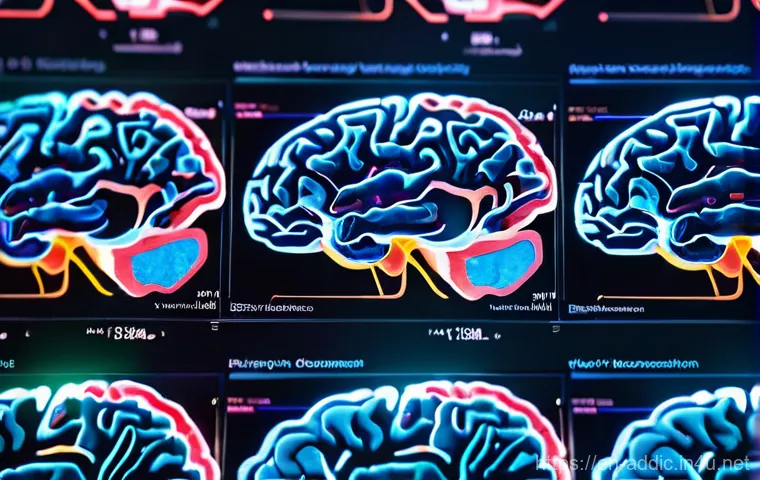
Hey there, digital explorer! Ever felt that strange pull to endlessly scroll, even when you know you should probably step away? Or perhaps you’ve noticed your focus isn’t quite what it used to be after a marathon session online?
You’re not alone. In our hyper-connected world, the line between healthy digital engagement and problematic overuse is getting blurrier by the day, and it’s something I’ve personally seen affect so many friends and even my own habits.
It’s truly wild to think about how much our brains adapt, right? What if I told you that our constant online presence isn’t just a habit, but it could actually be subtly reshaping the very wiring of our brains?
Recent studies and the chatter in the neuroscience community are pointing to some fascinating, and at times concerning, connections between our digital habits and real neurological changes.
From altered reward pathways to impacts on memory and attention, the implications are profound for all of us navigating this digital age, especially as new technologies like VR and pervasive AI integrate even further into our daily lives.
Let’s dive into the fascinating world where internet usage meets neuroscience and uncover exactly what’s happening upstairs.
Your Brain’s New Operating
Hey, ever wondered how our brains, these incredibly complex and adaptable organs, are actually coping with the constant barrage of information and interaction that defines our digital lives? It’s something I’ve personally pondered a lot, especially watching how quickly kids pick up new tech. The truth is, our brains are phenomenal at adapting, but this adaptability, or “plasticity” as the neuroscientists call it, is a double-edged sword when it comes to the internet. We’re essentially creating a new operating system for our minds, one that’s constantly running in the background, updating, and processing. Think about it: our ancestors worried about saber-toothed tigers, and our brains evolved to react to immediate physical threats. Now, we’re navigating a world of endless notifications, curated feeds, and virtual realities. This constant demand for attention and the sheer volume of data we process daily are undeniably leaving their mark. I’ve noticed in my own life that after a long day of staring at screens, my brain feels strangely wired, yet also exhausted, like it’s been running a marathon without actually moving a muscle. It’s truly fascinating, and a little bit unnerving, how deeply integrated these digital experiences have become. We’re not just using the internet; in many ways, the internet is reshaping us.
The Plasticity Paradox: How Our Brains Remold Themselves Online
Our brains are incredible, aren’t they? They’re constantly changing, adapting, and forming new connections based on our experiences – that’s neuroplasticity in action. When we spend hours online, our brains are literally remolding themselves to become more efficient at navigating digital spaces. This can be great for things like quick information retrieval or multitasking (or what we *think* is multitasking!). However, there’s a paradox here. While we might get better at rapidly scanning information or switching between apps, the very neural pathways associated with deep concentration, sustained attention, and slower, more deliberate thought processes might be getting less “exercise.” It’s like constantly doing sprints but never running a marathon. I’ve felt this firsthand when trying to settle down with a good book after a day of bouncing between emails, social media, and news articles. My brain just wants to jump to the next thing, making it a real effort to focus on a single, linear narrative. It’s a stark reminder that while our brains are amazingly flexible, the type of input we give them profoundly shapes the kind of output we get.
The Information Overload Effect: More Data, Less Depth?
Have you ever felt like you’re drowning in information? It’s a common experience in our hyper-connected world. Every day, we’re bombarded with an unprecedented volume of data – news, articles, social media posts, videos, ads… the list is endless. Our brains are designed to process information, but there’s a limit to how much we can truly absorb and make sense of. This constant influx of data can lead to what experts call “information overload,” and I can tell you, it’s a real drain. Instead of gaining deeper insights, we often end up with a superficial understanding of many topics. It’s like grazing on a vast buffet without ever truly savoring a single dish. This constant “snacking” on information, driven by algorithms and endless feeds, can hinder our ability to engage in critical thinking and analytical processing. I’ve personally noticed that if I spend too much time just skimming headlines, my capacity for deeper analysis feels diminished. It’s a stark contrast to how I feel after reading a detailed report or an in-depth article. The brain, in its attempt to cope with the sheer volume, might prioritize speed over depth, which is something we all need to be mindful of.
Chasing the Digital High: Dopamine and Our Screens
Alright, let’s get real about what makes us keep coming back to our screens, even when we know we should probably put them down. It’s not just habit, my friends; there’s a powerful neurochemical at play: dopamine. You’ve probably heard of it as the “feel-good” hormone, and it absolutely is. Our brains release dopamine when we experience something pleasurable or rewarding, creating that little “hit” that makes us want more. And guess what the internet, especially social media, is expertly designed to do? Provide constant, unpredictable hits of dopamine. Every notification, every like, every new message, every fresh piece of content – it’s a tiny reward. I’ve definitely felt that little surge of excitement when my phone buzzes, even if it’s just a mundane email. It’s a powerful cycle, and it can be incredibly hard to break because our brains are literally hardwired to seek out those rewards. It’s not about lacking willpower; it’s about understanding a fundamental brain mechanism that technology has learned to leverage so brilliantly.
The Endless Scroll: A Reward Pathway Loop
That seemingly innocent act of endlessly scrolling through your feed? It’s a masterclass in exploiting our brain’s reward pathways. Each refresh, each new post, offers the potential for something novel, something exciting, something that will give you that tiny dopamine hit. Our brains are wired to seek out novelty and rewards, and the algorithms behind our favorite apps are incredibly good at feeding us just enough uncertainty and sporadic rewards to keep us engaged. It’s a variable-ratio reinforcement schedule, similar to how slot machines work, making it incredibly addictive. I’ve found myself in that trance-like state, just flicking my thumb, not even really absorbing what I’m seeing, but compelled to continue, just in case the *next* thing is super interesting or funny. It’s a subtle but powerful loop that can easily eat up hours of our day without us even realizing it. Breaking free from this loop requires a conscious effort to interrupt the pattern and understand that sometimes, the greatest reward is simply stepping away.
Instant Gratification’s Toll: Patience and Impulse Control
In a world where answers are just a search query away, and entertainment is on demand, our brains are getting really good at instant gratification. We expect immediate results, immediate entertainment, immediate feedback. This constant exposure to instant rewards can, over time, really take a toll on our patience and impulse control. Why wait for something when you can get it now? I’ve noticed this in myself: if a website takes more than a few seconds to load, I get visibly impatient. This wasn’t always the case! This shift in expectation can make it harder to engage in activities that require sustained effort and delayed gratification – things like learning a new skill, working on a long-term project, or even just having a deep conversation without checking your phone. Our ability to tolerate discomfort or boredom, crucial for creativity and problem-solving, seems to be eroding when every idle moment is filled with the immediate dopamine fix of our digital devices.
The Great Attention Robbery: Focus in a Fragmented World
If you’ve ever felt like your attention span is shrinking, you’re not imagining things. In our hyper-connected world, our focus is under constant siege. Every ping, every notification, every new tab calling for our attention is essentially an interruption, pulling us away from whatever we’re trying to concentrate on. I often joke that my brain feels like it’s running ten different programs at once, none of them at full capacity. This constant context-switching isn’t just annoying; it has real neurological consequences. Our brains are designed to focus on one thing at a time for optimal performance, and when we constantly shift our attention, we’re not only less efficient, but we’re also training our brains to be easily distracted. It’s a vicious cycle where the more we allow ourselves to be interrupted, the harder it becomes to sustain deep focus. It truly feels like a battle to protect my attention from the relentless demands of the digital realm, and it’s a battle I sometimes lose.
Multitasking Myths: The Cost of Constant Context Switching
For years, “multitasking” was hailed as a superpower, a skill to brag about on your resume. But here’s the truth bomb: true multitasking, where your brain is actually processing multiple complex tasks simultaneously, is largely a myth. What we’re actually doing is rapid context-switching. Our brain quickly shuffles between tasks, but each shuffle comes with a cognitive cost. Every time you switch from writing an email to checking a notification, and then back to the email, your brain has to reorient itself, retrieve the relevant information, and get back into the flow. This constant shifting not only slows you down but also increases mental fatigue and the likelihood of errors. I’ve seen it firsthand in my own work: if I try to write an article while simultaneously monitoring social media, the quality of my writing suffers, and it takes me twice as long. It’s a reminder that our brains, for all their power, thrive on focused, uninterrupted attention for deep and meaningful work.
Deep Work vs. Shallow Surfing: Reclaiming Our Concentration
In this fragmented digital landscape, the concept of “deep work” – focused, uninterrupted concentration on a single task – feels almost revolutionary. It’s the kind of work that truly moves the needle, fosters creativity, and produces high-quality results. Unfortunately, our digital habits often push us towards “shallow surfing” – constantly bouncing between low-value tasks, skimming content, and reacting to notifications. This shallow engagement rarely leads to significant progress or genuine learning. I’ve discovered that intentionally carving out blocks of time for deep work, free from digital distractions, has been a game-changer for my productivity and mental clarity. It’s not easy at first; your brain, accustomed to constant stimulation, will resist. But with practice, you can retrain your focus muscle. It’s about recognizing that while our devices offer convenience, they can also steal our most precious resource: our undivided attention.
Memory in the Cloud: Are We Forgetting How to Remember?
It’s an interesting paradox, isn’t it? We have access to more information than any generation before us, literally the sum of human knowledge at our fingertips. Yet, have you ever felt like your personal memory is… well, not quite what it used to be? It’s a question I’ve wrestled with, especially when I realize I can’t recall a simple fact without immediately reaching for my phone. This isn’t just about aging; it’s about how our brains are adapting to having an external hard drive in our pockets. We’re outsourcing more and more of our recall to search engines and digital devices, and while convenient, it raises some profound questions about the nature of memory itself. Are we inadvertently training our brains to be less efficient at storing and retrieving information when we know we can just “Google it” in an instant? I’m convinced there’s a delicate balance to strike here, between leveraging technology and preserving our innate cognitive abilities.
Google as Our External Hard Drive: The Transactive Memory Effect
Think about your phone or laptop as an extension of your memory. That’s essentially what the concept of “transactive memory” describes – how groups (or in this case, individuals and their devices) collectively store and retrieve information. We know that Google has the answer to almost anything, so instead of committing facts to our own long-term memory, we often just remember *how to find* the information. It’s efficient, yes, but it also means our brains might be getting a little lazy when it comes to actual recall. I’ve definitely experienced this – I’ll know I read something online, but I can’t recall the specific details, only that I can easily look it up again. While this frees up mental space for other things, it also means we might be losing some of the cognitive benefits of active memory formation and retrieval, which are crucial for learning and critical thinking. It’s a trade-off, and one we should be aware of.
Navigating Digital Nostalgia: The Impact on Personal Recall
Our digital lives are filled with photos, videos, and archived messages – a seemingly endless stream of personal memories. While it’s wonderful to revisit these moments, it also changes how we engage with and form our own memories. When every event is meticulously documented and uploaded, are we still relying on our internal processes to consolidate and recall experiences? Some research suggests that the act of taking photos, for example, can sometimes diminish our memory of the event itself because we’re outsourcing the “remembering” to the camera. I’ve often found myself scrolling through old social media posts to recall details of past events, rather than just letting the memories surface naturally. It’s a fascinating shift, where our personal narratives are increasingly mediated by our digital archives, impacting not just what we remember, but *how* we remember it.
Digital Detox: Reclaiming Your Real-World Connections
In a world that increasingly pushes us toward digital interaction, taking a step back and intentionally disconnecting can feel incredibly liberating, almost revolutionary. I’ve personally experimented with digital detoxes, ranging from a few hours to a full weekend, and what I consistently find is a renewed appreciation for the tangible world and genuine human connection. It’s not about abandoning technology entirely, but about reclaiming balance. When we’re constantly plugged in, it’s easy to mistake online interaction for real connection, but as many of us have experienced, there’s a profound difference between a hundred likes on a post and a heartfelt conversation with a friend face-to-face. This isn’t just about feeling good; it has real implications for our emotional well-being and the quality of our relationships. It’s about consciously choosing to nurture the bonds that truly matter, both with others and with ourselves, away from the glow of a screen.
Beyond the Likes: Cultivating Authentic Social Bonds
Social media promises connection, and in some ways, it delivers. We can stay updated with distant friends and family, and even meet like-minded individuals. However, the curated, often superficial nature of online interactions can sometimes leave us feeling more isolated than connected. The pursuit of “likes” and online validation can become a substitute for genuine, empathetic engagement. I’ve noticed that when I prioritize online interactions over real-world meetups, my relationships sometimes feel shallower. It’s a stark reminder that while digital platforms can bridge distances, they can’t fully replicate the richness and depth of shared physical presence, eye contact, and nuanced conversation. Cultivating authentic social bonds means stepping away from the screen, making plans, and truly being present with the people who matter most in our lives. It’s about quality over quantity when it comes to connection.
Mindful Engagement: Setting Boundaries with Technology
The key to a healthier digital life isn’t necessarily abandoning technology altogether, but rather practicing mindful engagement. This means being intentional about *when*, *why*, and *how* we use our devices, instead of letting them dictate our behavior. It involves setting clear boundaries, both for ourselves and for our families. This could be something simple like having “no phone” zones in the house, designating specific tech-free hours, or consciously choosing to leave your phone in another room when you’re working on something important. I’ve found that implementing a “digital sunset” – putting away screens an hour or two before bed – has dramatically improved my sleep quality. It’s about taking control back, rather than passively allowing technology to consume our time and attention. Mindful engagement empowers us to use technology as a tool, rather than letting it use us.
The Blueprint for a Balanced Digital Life: Practical Strategies
Okay, so we’ve talked a lot about the profound ways our digital habits can reshape our brains and our lives. It can sound a bit overwhelming, right? But here’s the good news: we’re not powerless. In fact, understanding these effects is the first step towards building a more intentional and balanced digital life. It’s about creating a personal blueprint, a set of strategies that work for *you*, to harness the incredible power of technology without letting it completely dominate your mental landscape. This isn’t about deprivation; it’s about optimization – optimizing your well-being, your focus, and your genuine connections. I’ve personally experimented with countless tips and tricks over the years, and what I’ve learned is that consistency and self-awareness are far more effective than radical, short-lived detoxes. It’s about integrating healthy tech habits into your daily routine, little by little, making them sustainable and enjoyable.
Crafting Your Digital Wellness Routine
Just like you have a morning routine or a fitness routine, creating a digital wellness routine can be incredibly beneficial. This isn’t a one-size-fits-all solution; it’s about figuring out what works for your lifestyle and your brain. For me, it starts with not checking my phone first thing in the morning. Instead, I dedicate that time to a quiet activity like reading or journaling, allowing my brain to ease into the day without immediate digital demands. Another key element is scheduling specific times for checking emails and social media, rather than being constantly available. This creates clear boundaries and prevents those dopamine hits from derailing my focus throughout the day. Consider incorporating mindful breaks, where you step away from screens entirely, even for just five minutes, to stretch, look out a window, or simply take a few deep breaths. These small, consistent habits can collectively make a massive difference in how you feel and how well your brain performs.
Tech-Free Zones and Time-Blocking for Focus
One of the most effective strategies I’ve discovered for reclaiming my focus is creating designated tech-free zones and utilizing time-blocking. A tech-free zone could be your bedroom, your dining table, or even a specific corner of your living room. The rule is simple: no devices allowed. This creates a physical space where your brain knows it can truly disconnect and rest. On the flip side, time-blocking involves scheduling specific blocks of time for focused work, during which all non-essential notifications are turned off. I personally block out 90-minute “deep work” sessions and use an app that disables distracting websites during that time. It might sound rigid, but I promise, the freedom you gain from uninterrupted focus is incredible. It allows your brain to truly immerse itself in a task, leading to higher quality output and a greater sense of accomplishment. It’s about intentionality over reactivity, and it truly works wonders for productivity and mental peace.
| Brain Region / Function | Impact of Excessive Internet Use | Potential Solutions for Balance |
|---|---|---|
| Prefrontal Cortex (PFC) | Decreased gray matter volume, impaired decision-making, reduced impulse control. | Mindful breaks, setting screen time limits, engaging in non-digital problem-solving. |
| Reward System (Dopamine Pathways) | Overstimulation leading to craving, desensitization to natural rewards, increased impulsivity. | “Digital detoxes,” delaying gratification, seeking novel experiences offline. |
| Hippocampus (Memory) | Reliance on external digital memory, potentially affecting long-term memory consolidation. | Active recall exercises, journaling, reducing “photo-taking” for memory. |
| Attention Networks | Increased distractibility, reduced sustained attention, difficulty with deep focus. | Time-blocking for deep work, single-tasking, disabling notifications. |
| Sleep Regulation | Blue light disruption, increased arousal before bed, poorer sleep quality. | Digital sunsets, keeping devices out of the bedroom, consistent sleep schedule. |
Your Brain’s New Operating
Hey, ever wondered how our brains, these incredibly complex and adaptable organs, are actually coping with the constant barrage of information and interaction that defines our digital lives? It’s something I’ve personally pondered a lot, especially watching how quickly kids pick up new tech. The truth is, our brains are phenomenal at adapting, but this adaptability, or “plasticity” as the neuroscientists call it, is a double-edged sword when it comes to the internet. We’re essentially creating a new operating system for our minds, one that’s constantly running in the background, updating, and processing. Think about it: our ancestors worried about saber-toothed tigers, and our brains evolved to react to immediate physical threats. Now, we’re navigating a world of endless notifications, curated feeds, and virtual realities. This constant demand for attention and the sheer volume of data we process daily are undeniably leaving their mark. I’ve noticed in my own life that after a long day of staring at screens, my brain feels strangely wired, yet also exhausted, like it’s been running a marathon without actually moving a muscle. It’s truly fascinating, and a little bit unnerving, how deeply integrated these digital experiences have become. We’re not just using the internet; in many ways, the internet is reshaping us.
The Plasticity Paradox: How Our Brains Remold Themselves Online
Our brains are incredible, aren’t they? They’re constantly changing, adapting, and forming new connections based on our experiences – that’s neuroplasticity in action. When we spend hours online, our brains are literally remolding themselves to become more efficient at navigating digital spaces. This can be great for things like quick information retrieval or multitasking (or what we *think* is multitasking!). However, there’s a paradox here. While we might get better at rapidly scanning information or switching between apps, the very neural pathways associated with deep concentration, sustained attention, and slower, more deliberate thought processes might be getting less “exercise.” It’s like constantly doing sprints but never running a marathon. I’ve felt this firsthand when trying to settle down with a good book after a day of bouncing between emails, social media, and news articles. My brain just wants to jump to the next thing, making it a real effort to focus on a single, linear narrative. It’s a stark reminder that while our brains are amazingly flexible, the type of input we give them profoundly shapes the kind of output we get.
The Information Overload Effect: More Data, Less Depth?

Have you ever felt like you’re drowning in information? It’s a common experience in our hyper-connected world. Every day, we’re bombarded with an unprecedented volume of data – news, articles, social media posts, videos, ads… the list is endless. Our brains are designed to process information, but there’s a limit to how much we can truly absorb and make sense of. This constant influx of data can lead to what experts call “information overload,” and I can tell you, it’s a real drain. Instead of gaining deeper insights, we often end up with a superficial understanding of many topics. It’s like grazing on a vast buffet without ever truly savoring a single dish. This constant “snacking” on information, driven by algorithms and endless feeds, can hinder our ability to engage in critical thinking and analytical processing. I’ve personally noticed that if I spend too much time just skimming headlines, my capacity for deeper analysis feels diminished. It’s a stark contrast to how I feel after reading a detailed report or an in-depth article. The brain, in its attempt to cope with the sheer volume, might prioritize speed over depth, which is something we all need to be mindful of.
Chasing the Digital High: Dopamine and Our Screens
Alright, let’s get real about what makes us keep coming back to our screens, even when we know we should probably put them down. It’s not just habit, my friends; there’s a powerful neurochemical at play: dopamine. You’ve probably heard of it as the “feel-good” hormone, and it absolutely is. Our brains release dopamine when we experience something pleasurable or rewarding, creating that little “hit” that makes us want more. And guess what the internet, especially social media, is expertly designed to do? Provide constant, unpredictable hits of dopamine. Every notification, every like, every new message, every fresh piece of content – it’s a tiny reward. I’ve definitely felt that little surge of excitement when my phone buzzes, even if it’s just a mundane email. It’s a powerful cycle, and it can be incredibly hard to break because our brains are literally hardwired to seek out those rewards. It’s not about lacking willpower; it’s about understanding a fundamental brain mechanism that technology has learned to leverage so brilliantly.
The Endless Scroll: A Reward Pathway Loop
That seemingly innocent act of endlessly scrolling through your feed? It’s a masterclass in exploiting our brain’s reward pathways. Each refresh, each new post, offers the potential for something novel, something exciting, something that will give you that tiny dopamine hit. Our brains are wired to seek out novelty and rewards, and the algorithms behind our favorite apps are incredibly good at feeding us just enough uncertainty and sporadic rewards to keep us engaged. It’s a variable-ratio reinforcement schedule, similar to how slot machines work, making it incredibly addictive. I’ve found myself in that trance-like state, just flicking my thumb, not even really absorbing what I’m seeing, but compelled to continue, just in case the *next* thing is super interesting or funny. It’s a subtle but powerful loop that can easily eat up hours of our day without us even realizing it. Breaking free from this loop requires a conscious effort to interrupt the pattern and understand that sometimes, the greatest reward is simply stepping away.
Instant Gratification’s Toll: Patience and Impulse Control
In a world where answers are just a search query away, and entertainment is on demand, our brains are getting really good at instant gratification. We expect immediate results, immediate entertainment, immediate feedback. This constant exposure to instant rewards can, over time, really take a toll on our patience and impulse control. Why wait for something when you can get it now? I’ve noticed this in myself: if a website takes more than a few seconds to load, I get visibly impatient. This wasn’t always the case! This shift in expectation can make it harder to engage in activities that require sustained effort and delayed gratification – things like learning a new skill, working on a long-term project, or even just having a deep conversation without checking your phone. Our ability to tolerate discomfort or boredom, crucial for creativity and problem-solving, seems to be eroding when every idle moment is filled with the immediate dopamine fix of our digital devices.
The Great Attention Robbery: Focus in a Fragmented World
If you’ve ever felt like your attention span is shrinking, you’re not imagining things. In our hyper-connected world, our focus is under constant siege. Every ping, every notification, every new tab calling for our attention is essentially an interruption, pulling us away from whatever we’re trying to concentrate on. I often joke that my brain feels like it’s running ten different programs at once, none of them at full capacity. This constant context-switching isn’t just annoying; it has real neurological consequences. Our brains are designed to focus on one thing at a time for optimal performance, and when we constantly shift our attention, we’re not only less efficient, but we’re also training our brains to be easily distracted. It’s a vicious cycle where the more we allow ourselves to be interrupted, the harder it becomes to sustain deep focus. It truly feels like a battle to protect my attention from the relentless demands of the digital realm, and it’s a battle I sometimes lose.
Multitasking Myths: The Cost of Constant Context Switching
For years, “multitasking” was hailed as a superpower, a skill to brag about on your resume. But here’s the truth bomb: true multitasking, where your brain is actually processing multiple complex tasks simultaneously, is largely a myth. What we’re actually doing is rapid context-switching. Our brain quickly shuffles between tasks, but each shuffle comes with a cognitive cost. Every time you switch from writing an email to checking a notification, and then back to the email, your brain has to reorient itself, retrieve the relevant information, and get back into the flow. This constant shifting not only slows you down but also increases mental fatigue and the likelihood of errors. I’ve seen it firsthand in my own work: if I try to write an article while simultaneously monitoring social media, the quality of my writing suffers, and it takes me twice as long. It’s a reminder that our brains, for all their power, thrive on focused, uninterrupted attention for deep and meaningful work.
Deep Work vs. Shallow Surfing: Reclaiming Our Concentration
In this fragmented digital landscape, the concept of “deep work” – focused, uninterrupted concentration on a single task – feels almost revolutionary. It’s the kind of work that truly moves the needle, fosters creativity, and produces high-quality results. Unfortunately, our digital habits often push us towards “shallow surfing” – constantly bouncing between low-value tasks, skimming content, and reacting to notifications. This shallow engagement rarely leads to significant progress or genuine learning. I’ve discovered that intentionally carving out blocks of time for deep work, free from digital distractions, has been a game-changer for my productivity and mental clarity. It’s not easy at first; your brain, accustomed to constant stimulation, will resist. But with practice, you can retrain your focus muscle. It’s about recognizing that while our devices offer convenience, they can also steal our most precious resource: our undivided attention.
Memory in the Cloud: Are We Forgetting How to Remember?
It’s an interesting paradox, isn’t it? We have access to more information than any generation before us, literally the sum of human knowledge at our fingertips. Yet, have you ever felt like your personal memory is… well, not quite what it used to be? It’s a question I’ve wrestled with, especially when I realize I can’t recall a simple fact without immediately reaching for my phone. This isn’t just about aging; it’s about how our brains are adapting to having an external hard drive in our pockets. We’re outsourcing more and more of our recall to search engines and digital devices, and while convenient, it raises some profound questions about the nature of memory itself. Are we inadvertently training our brains to be less efficient at storing and retrieving information when we know we can just “Google it” in an instant? I’m convinced there’s a delicate balance to strike here, between leveraging technology and preserving our innate cognitive abilities.
Google as Our External Hard Drive: The Transactive Memory Effect
Think about your phone or laptop as an extension of your memory. That’s essentially what the concept of “transactive memory” describes – how groups (or in this case, individuals and their devices) collectively store and retrieve information. We know that Google has the answer to almost anything, so instead of committing facts to our own long-term memory, we often just remember *how to find* the information. It’s efficient, yes, but it also means our brains might be getting a little lazy when it comes to actual recall. I’ve definitely experienced this – I’ll know I read something online, but I can’t recall the specific details, only that I can easily look it up again. While this frees up mental space for other things, it also means we might be losing some of the cognitive benefits of active memory formation and retrieval, which are crucial for learning and critical thinking. It’s a trade-off, and one we should be aware of.
Navigating Digital Nostalgia: The Impact on Personal Recall
Our digital lives are filled with photos, videos, and archived messages – a seemingly endless stream of personal memories. While it’s wonderful to revisit these moments, it also changes how we engage with and form our own memories. When every event is meticulously documented and uploaded, are we still relying on our internal processes to consolidate and recall experiences? Some research suggests that the act of taking photos, for example, can sometimes diminish our memory of the event itself because we’re outsourcing the “remembering” to the camera. I’ve often found myself scrolling through old social media posts to recall details of past events, rather than just letting the memories surface naturally. It’s a fascinating shift, where our personal narratives are increasingly mediated by our digital archives, impacting not just what we remember, but *how* we remember it.
Digital Detox: Reclaiming Your Real-World Connections
In a world that increasingly pushes us toward digital interaction, taking a step back and intentionally disconnecting can feel incredibly liberating, almost revolutionary. I’ve personally experimented with digital detoxes, ranging from a few hours to a full weekend, and what I consistently find is a renewed appreciation for the tangible world and genuine human connection. It’s not about abandoning technology entirely, but about reclaiming balance. When we’re constantly plugged in, it’s easy to mistake online interaction for real connection, but as many of us have experienced, there’s a profound difference between a hundred likes on a post and a heartfelt conversation with a friend face-to-face. This isn’t just about feeling good; it has real implications for our emotional well-being and the quality of our relationships. It’s about consciously choosing to nurture the bonds that truly matter, both with others and with ourselves, away from the glow of a screen.
Beyond the Likes: Cultivating Authentic Social Bonds
Social media promises connection, and in some ways, it delivers. We can stay updated with distant friends and family, and even meet like-minded individuals. However, the curated, often superficial nature of online interactions can sometimes leave us feeling more isolated than connected. The pursuit of “likes” and online validation can become a substitute for genuine, empathetic engagement. I’ve noticed that when I prioritize online interactions over real-world meetups, my relationships sometimes feel shallower. It’s a stark reminder that while digital platforms can bridge distances, they can’t fully replicate the richness and depth of shared physical presence, eye contact, and nuanced conversation. Cultivating authentic social bonds means stepping away from the screen, making plans, and truly being present with the people who matter most in our lives. It’s about quality over quantity when it comes to connection.
Mindful Engagement: Setting Boundaries with Technology
The key to a healthier digital life isn’t necessarily abandoning technology altogether, but rather practicing mindful engagement. This means being intentional about *when*, *why*, and *how* we use our devices, instead of letting them dictate our behavior. It involves setting clear boundaries, both for ourselves and for our families. This could be something simple like having “no phone” zones in the house, designating specific tech-free hours, or consciously choosing to leave your phone in another room when you’re working on something important. I’ve found that implementing a “digital sunset” – putting away screens an hour or two before bed – has dramatically improved my sleep quality. It’s about taking control back, rather than passively allowing technology to consume our time and attention. Mindful engagement empowers us to use technology as a tool, rather than letting it use us.
The Blueprint for a Balanced Digital Life: Practical Strategies
Okay, so we’ve talked a lot about the profound ways our digital habits can reshape our brains and our lives. It can sound a bit overwhelming, right? But here’s the good news: we’re not powerless. In fact, understanding these effects is the first step towards building a more intentional and balanced digital life. It’s about creating a personal blueprint, a set of strategies that work for *you*, to harness the incredible power of technology without letting it completely dominate your mental landscape. This isn’t about deprivation; it’s about optimization – optimizing your well-being, your focus, and your genuine connections. I’ve personally experimented with countless tips and tricks over the years, and what I’ve learned is that consistency and self-awareness are far more effective than radical, short-lived detoxes. It’s about integrating healthy tech habits into your daily routine, little by little, making them sustainable and enjoyable.
Crafting Your Digital Wellness Routine
Just like you have a morning routine or a fitness routine, creating a digital wellness routine can be incredibly beneficial. This isn’t a one-size-fits-all solution; it’s about figuring out what works for your lifestyle and your brain. For me, it starts with not checking my phone first thing in the morning. Instead, I dedicate that time to a quiet activity like reading or journaling, allowing my brain to ease into the day without immediate digital demands. Another key element is scheduling specific times for checking emails and social media, rather than being constantly available. This creates clear boundaries and prevents those dopamine hits from derailing my focus throughout the day. Consider incorporating mindful breaks, where you step away from screens entirely, even for just five minutes, to stretch, look out a window, or simply take a few deep breaths. These small, consistent habits can collectively make a massive difference in how you feel and how well your brain performs.
Tech-Free Zones and Time-Blocking for Focus
One of the most effective strategies I’ve discovered for reclaiming my focus is creating designated tech-free zones and utilizing time-blocking. A tech-free zone could be your bedroom, your dining table, or even a specific corner of your living room. The rule is simple: no devices allowed. This creates a physical space where your brain knows it can truly disconnect and rest. On the flip side, time-blocking involves scheduling specific blocks of time for focused work, during which all non-essential notifications are turned off. I personally block out 90-minute “deep work” sessions and use an app that disables distracting websites during that time. It might sound rigid, but I promise, the freedom you gain from uninterrupted focus is incredible. It allows your brain to truly immerse itself in a task, leading to higher quality output and a greater sense of accomplishment. It’s about intentionality over reactivity, and it truly works wonders for productivity and mental peace.
| Brain Region / Function | Impact of Excessive Internet Use | Potential Solutions for Balance |
|---|---|---|
| Prefrontal Cortex (PFC) | Decreased gray matter volume, impaired decision-making, reduced impulse control. | Mindful breaks, setting screen time limits, engaging in non-digital problem-solving. |
| Reward System (Dopamine Pathways) | Overstimulation leading to craving, desensitization to natural rewards, increased impulsivity. | “Digital detoxes,” delaying gratification, seeking novel experiences offline. |
| Hippocampus (Memory) | Reliance on external digital memory, potentially affecting long-term memory consolidation. | Active recall exercises, journaling, reducing “photo-taking” for memory. |
| Attention Networks | Increased distractibility, reduced sustained attention, difficulty with deep focus. | Time-blocking for deep work, single-tasking, disabling notifications. |
| Sleep Regulation | Blue light disruption, increased arousal before bed, poorer sleep quality. | Digital sunsets, keeping devices out of the bedroom, consistent sleep schedule. |
Wrapping Things Up
Wow, we’ve covered a lot today, haven’t we? It’s genuinely mind-boggling to think about how much our digital habits are shaping the very core of our brains. From dopamine hits to the struggle for deep focus, it’s clear that our relationship with technology is incredibly complex, yet also profoundly impactful. My hope is that by peeling back the layers and understanding these processes, you feel empowered, not overwhelmed. It’s not about ditching your devices completely, but rather becoming a conscious architect of your digital experience, building a life where technology serves you, rather than the other way around. Let’s embrace this journey together, one mindful scroll at a time.
Good to Know Info
1. The 20-20-20 Rule for Eye Strain: Spending hours staring at screens can really take a toll on your eyes. A simple, effective trick I swear by is the 20-20-20 rule. Every 20 minutes, look at something 20 feet away for at least 20 seconds. It sounds almost too easy, but trust me, it gives your eye muscles a much-needed break and helps prevent digital eye strain, dryness, and fatigue. I keep a timer on my desktop to remind myself, and it makes a world of difference, especially on those marathon writing days.
2. Implement a “Digital Sunset”: This is one of the most powerful habits I’ve adopted for better sleep. Aim to put away all screens – phone, tablet, laptop, TV – at least an hour before bed, ideally two. The blue light emitted by devices messes with your body’s melatonin production, making it harder to fall asleep and reducing sleep quality. Instead, try reading a physical book, listening to a podcast, or just chatting with family. You’ll be amazed at how much faster you drift off and how much more rested you feel.
3. Turn Off Non-Essential Notifications: Our phones are constantly vying for our attention with pings, vibrations, and banners. Each one is a tiny interruption that fractures our focus. Go through your phone settings and be ruthless. Keep only the absolutely essential notifications – perhaps calls from family or work-critical alerts. For everything else, turn it off. I found this incredibly liberating; it puts me back in control of my attention and dramatically reduces the urge to constantly check my phone, allowing for longer stretches of deep work and real-world presence.
4. Create a “Focus Playlist”: Music can be a powerful tool for concentration, or a huge distraction. I’ve curated a few instrumental playlists – classical, lo-fi beats, or ambient sounds – specifically for deep work sessions. These playlists are devoid of lyrics or sudden changes that might pull my attention away. When I put on my focus playlist, my brain quickly learns it’s “work time,” and it helps me get into a flow state much faster. Experiment with different genres to find what works best for your brain!
5. Schedule “Tech-Free Adventures”: Beyond just digital detoxes at home, actively plan activities that are inherently tech-free. This could be a hike in a local park, a visit to a museum, cooking a new recipe, or simply going for a walk around your neighborhood without your phone. These experiences not only give your brain a break from screens but also foster creativity, strengthen real-world connections, and help you reconnect with your surroundings. I try to do at least one “analog adventure” every weekend, and it truly recharges my mental batteries.
Key Takeaways
At the heart of it all, remember that your brain is an incredibly adaptable marvel, but this adaptability means it’s constantly being shaped by your digital interactions. We’ve seen how neuroplasticity, while beneficial for learning new tech, can also impact our ability for deep concentration and sustained focus. The sheer volume of online information can lead to overload, turning our quest for knowledge into shallow surfing if we’re not careful. And let’s not forget the powerful role of dopamine, driving us back to our screens for those little hits of gratification, which can subtly erode our patience and impulse control. Your attention, truly one of your most valuable assets, is constantly under attack in this fragmented world, making intentional deep work more crucial than ever. Finally, the convenience of having “memory in the cloud” is fantastic, but it’s vital to strike a balance to ensure we’re still actively engaging our personal recall, rather than outsourcing it entirely. Ultimately, a balanced digital life isn’t about perfection, but about conscious choices, setting smart boundaries, and mindfully integrating technology so that it enhances your life, rather than diminishes it. You’ve got this!
Frequently Asked Questions (FAQ) 📖
Q: So, how exactly does all this endless scrolling and constant online presence actually change our brains? It sounds a bit intimidating, to be honest.
A: You’re hitting on something so crucial here! It’s not just a feeling; our brains are incredibly adaptive, and this phenomenon is called neuroplasticity.
When we’re constantly bombarded with new information, notifications, and instant gratification online, our brains adapt to this rapid pace. I’ve personally felt it – that urge to quickly switch between tabs or check my phone every few minutes.
What happens is that our neural pathways get rewired to crave this fast-paced, novelty-seeking behavior. It’s like our attention muscles are being trained for sprints, not marathons.
This can make it harder for us to settle into deep work or sustained concentration, impacting our ability to truly focus on one thing for an extended period.
It’s not about permanent damage, but rather a profound shift in how our brains prefer to process information, driven by the constant stimulation of the digital world.
It truly makes you wonder, doesn’t it, about the subtle ways our day-to-day habits shape our very minds.
Q: You mentioned “altered reward pathways” in the intro – that really caught my attention. What does that actually mean, and how does my phone or computer play into it?
A: Oh, this is where it gets really fascinating, and perhaps a little eye-opening! Our brains have these incredible reward pathways, primarily involving dopamine, which is essentially our brain’s “feel-good” chemical.
Traditionally, dopamine is released when we do something important for survival, like eating or social bonding. But with our digital devices, it’s a whole new ball game.
Every notification, every “like,” every new message or engaging piece of content gives us a little hit of dopamine. The tricky part is that these rewards are often unpredictable – we don’t know when we’ll get one, which makes us constantly check, much like someone checking a slot machine.
I’ve definitely been there, mindlessly refreshing a feed, just waiting for that little burst of satisfaction. This intermittent reinforcement actually makes the behavior incredibly addictive and strengthens those pathways, making our brains seek out more of these digital rewards.
Over time, our brains can start to prioritize these easily accessible, albeit shallow, digital rewards over deeper, more effortful real-world gratifications.
It’s not a moral failing; it’s just how our brain’s wiring responds to this incredibly potent digital environment.
Q: So, if our brains are changing, does that mean these impacts on memory and attention are permanent? Can we ever recover or “reset” our brains if we’ve been heavy internet users?
A: That’s a fantastic, hopeful question, and I’m thrilled to tell you that the answer leans heavily towards yes, we absolutely can! Remember that neuroplasticity I mentioned earlier?
It’s a double-edged sword, but ultimately, it’s our superpower. While our brains can adapt to constant digital stimulation and the associated challenges to memory and attention, they can also adapt back to a state of more focused engagement and improved recall.
I’ve seen it in my own life and among friends who’ve intentionally stepped back. It’s not an overnight fix, of course. It requires conscious effort, like engaging in “digital detoxes,” practicing mindfulness, or simply dedicating time to single-tasking activities without distractions.
Reading a physical book, spending time in nature, or engaging in deep conversations without devices nearby can all help retrain your brain for sustained attention.
Our brains are incredibly resilient, and with consistent effort and intentional habits, we can absolutely strengthen those neural pathways for memory and focus, helping us reclaim our cognitive capabilities.
It’s a journey, but a deeply rewarding one!
📚 References
➤ Hey, ever wondered how our brains, these incredibly complex and adaptable organs, are actually coping with the constant barrage of information and interaction that defines our digital lives?
It’s something I’ve personally pondered a lot, especially watching how quickly kids pick up new tech. The truth is, our brains are phenomenal at adapting, but this adaptability, or “plasticity” as the neuroscientists call it, is a double-edged sword when it comes to the internet.
We’re essentially creating a new operating system for our minds, one that’s constantly running in the background, updating, and processing. Think about it: our ancestors worried about saber-toothed tigers, and our brains evolved to react to immediate physical threats.
Now, we’re navigating a world of endless notifications, curated feeds, and virtual realities. This constant demand for attention and the sheer volume of data we process daily are undeniably leaving their mark.
I’ve noticed in my own life that after a long day of staring at screens, my brain feels strangely wired, yet also exhausted, like it’s been running a marathon without actually moving a muscle.
It’s truly fascinating, and a little bit unnerving, how deeply integrated these digital experiences have become. We’re not just using the internet; in many ways, the internet is reshaping us.
– Hey, ever wondered how our brains, these incredibly complex and adaptable organs, are actually coping with the constant barrage of information and interaction that defines our digital lives?
It’s something I’ve personally pondered a lot, especially watching how quickly kids pick up new tech. The truth is, our brains are phenomenal at adapting, but this adaptability, or “plasticity” as the neuroscientists call it, is a double-edged sword when it comes to the internet.
We’re essentially creating a new operating system for our minds, one that’s constantly running in the background, updating, and processing. Think about it: our ancestors worried about saber-toothed tigers, and our brains evolved to react to immediate physical threats.
Now, we’re navigating a world of endless notifications, curated feeds, and virtual realities. This constant demand for attention and the sheer volume of data we process daily are undeniably leaving their mark.
I’ve noticed in my own life that after a long day of staring at screens, my brain feels strangely wired, yet also exhausted, like it’s been running a marathon without actually moving a muscle.
It’s truly fascinating, and a little bit unnerving, how deeply integrated these digital experiences have become. We’re not just using the internet; in many ways, the internet is reshaping us.
➤ The Plasticity Paradox: How Our Brains Remold Themselves Online
– The Plasticity Paradox: How Our Brains Remold Themselves Online
➤ Our brains are incredible, aren’t they? They’re constantly changing, adapting, and forming new connections based on our experiences – that’s neuroplasticity in action.
When we spend hours online, our brains are literally remolding themselves to become more efficient at navigating digital spaces. This can be great for things like quick information retrieval or multitasking (or what we *think* is multitasking!).
However, there’s a paradox here. While we might get better at rapidly scanning information or switching between apps, the very neural pathways associated with deep concentration, sustained attention, and slower, more deliberate thought processes might be getting less “exercise.” It’s like constantly doing sprints but never running a marathon.
I’ve felt this firsthand when trying to settle down with a good book after a day of bouncing between emails, social media, and news articles. My brain just wants to jump to the next thing, making it a real effort to focus on a single, linear narrative.
It’s a stark reminder that while our brains are amazingly flexible, the type of input we give them profoundly shapes the kind of output we get.
– Our brains are incredible, aren’t they? They’re constantly changing, adapting, and forming new connections based on our experiences – that’s neuroplasticity in action.
When we spend hours online, our brains are literally remolding themselves to become more efficient at navigating digital spaces. This can be great for things like quick information retrieval or multitasking (or what we *think* is multitasking!).
However, there’s a paradox here. While we might get better at rapidly scanning information or switching between apps, the very neural pathways associated with deep concentration, sustained attention, and slower, more deliberate thought processes might be getting less “exercise.” It’s like constantly doing sprints but never running a marathon.
I’ve felt this firsthand when trying to settle down with a good book after a day of bouncing between emails, social media, and news articles. My brain just wants to jump to the next thing, making it a real effort to focus on a single, linear narrative.
It’s a stark reminder that while our brains are amazingly flexible, the type of input we give them profoundly shapes the kind of output we get.
➤ The Information Overload Effect: More Data, Less Depth?
– The Information Overload Effect: More Data, Less Depth?
➤ Have you ever felt like you’re drowning in information? It’s a common experience in our hyper-connected world. Every day, we’re bombarded with an unprecedented volume of data – news, articles, social media posts, videos, ads…
the list is endless. Our brains are designed to process information, but there’s a limit to how much we can truly absorb and make sense of. This constant influx of data can lead to what experts call “information overload,” and I can tell you, it’s a real drain.
Instead of gaining deeper insights, we often end up with a superficial understanding of many topics. It’s like grazing on a vast buffet without ever truly savoring a single dish.
This constant “snacking” on information, driven by algorithms and endless feeds, can hinder our ability to engage in critical thinking and analytical processing.
I’ve personally noticed that if I spend too much time just skimming headlines, my capacity for deeper analysis feels diminished. It’s a stark contrast to how I feel after reading a detailed report or an in-depth article.
The brain, in its attempt to cope with the sheer volume, might prioritize speed over depth, which is something we all need to be mindful of.
– Have you ever felt like you’re drowning in information? It’s a common experience in our hyper-connected world. Every day, we’re bombarded with an unprecedented volume of data – news, articles, social media posts, videos, ads…
the list is endless. Our brains are designed to process information, but there’s a limit to how much we can truly absorb and make sense of. This constant influx of data can lead to what experts call “information overload,” and I can tell you, it’s a real drain.
Instead of gaining deeper insights, we often end up with a superficial understanding of many topics. It’s like grazing on a vast buffet without ever truly savoring a single dish.
This constant “snacking” on information, driven by algorithms and endless feeds, can hinder our ability to engage in critical thinking and analytical processing.
I’ve personally noticed that if I spend too much time just skimming headlines, my capacity for deeper analysis feels diminished. It’s a stark contrast to how I feel after reading a detailed report or an in-depth article.
The brain, in its attempt to cope with the sheer volume, might prioritize speed over depth, which is something we all need to be mindful of.
➤ Chasing the Digital High: Dopamine and Our Screens
– Chasing the Digital High: Dopamine and Our Screens
➤ Alright, let’s get real about what makes us keep coming back to our screens, even when we know we should probably put them down. It’s not just habit, my friends; there’s a powerful neurochemical at play: dopamine.
You’ve probably heard of it as the “feel-good” hormone, and it absolutely is. Our brains release dopamine when we experience something pleasurable or rewarding, creating that little “hit” that makes us want more.
And guess what the internet, especially social media, is expertly designed to do? Provide constant, unpredictable hits of dopamine. Every notification, every like, every new message, every fresh piece of content – it’s a tiny reward.
I’ve definitely felt that little surge of excitement when my phone buzzes, even if it’s just a mundane email. It’s a powerful cycle, and it can be incredibly hard to break because our brains are literally hardwired to seek out those rewards.
It’s not about lacking willpower; it’s about understanding a fundamental brain mechanism that technology has learned to leverage so brilliantly.
– Alright, let’s get real about what makes us keep coming back to our screens, even when we know we should probably put them down. It’s not just habit, my friends; there’s a powerful neurochemical at play: dopamine.
You’ve probably heard of it as the “feel-good” hormone, and it absolutely is. Our brains release dopamine when we experience something pleasurable or rewarding, creating that little “hit” that makes us want more.
And guess what the internet, especially social media, is expertly designed to do? Provide constant, unpredictable hits of dopamine. Every notification, every like, every new message, every fresh piece of content – it’s a tiny reward.
I’ve definitely felt that little surge of excitement when my phone buzzes, even if it’s just a mundane email. It’s a powerful cycle, and it can be incredibly hard to break because our brains are literally hardwired to seek out those rewards.
It’s not about lacking willpower; it’s about understanding a fundamental brain mechanism that technology has learned to leverage so brilliantly.
➤ That seemingly innocent act of endlessly scrolling through your feed? It’s a masterclass in exploiting our brain’s reward pathways. Each refresh, each new post, offers the potential for something novel, something exciting, something that will give you that tiny dopamine hit.
Our brains are wired to seek out novelty and rewards, and the algorithms behind our favorite apps are incredibly good at feeding us just enough uncertainty and sporadic rewards to keep us engaged.
It’s a variable-ratio reinforcement schedule, similar to how slot machines work, making it incredibly addictive. I’ve found myself in that trance-like state, just flicking my thumb, not even really absorbing what I’m seeing, but compelled to continue, just in case the *next* thing is super interesting or funny.
It’s a subtle but powerful loop that can easily eat up hours of our day without us even realizing it. Breaking free from this loop requires a conscious effort to interrupt the pattern and understand that sometimes, the greatest reward is simply stepping away.
– That seemingly innocent act of endlessly scrolling through your feed? It’s a masterclass in exploiting our brain’s reward pathways. Each refresh, each new post, offers the potential for something novel, something exciting, something that will give you that tiny dopamine hit.
Our brains are wired to seek out novelty and rewards, and the algorithms behind our favorite apps are incredibly good at feeding us just enough uncertainty and sporadic rewards to keep us engaged.
It’s a variable-ratio reinforcement schedule, similar to how slot machines work, making it incredibly addictive. I’ve found myself in that trance-like state, just flicking my thumb, not even really absorbing what I’m seeing, but compelled to continue, just in case the *next* thing is super interesting or funny.
It’s a subtle but powerful loop that can easily eat up hours of our day without us even realizing it. Breaking free from this loop requires a conscious effort to interrupt the pattern and understand that sometimes, the greatest reward is simply stepping away.
➤ Instant Gratification’s Toll: Patience and Impulse Control
– Instant Gratification’s Toll: Patience and Impulse Control
➤ In a world where answers are just a search query away, and entertainment is on demand, our brains are getting really good at instant gratification. We expect immediate results, immediate entertainment, immediate feedback.
This constant exposure to instant rewards can, over time, really take a toll on our patience and impulse control. Why wait for something when you can get it now?
I’ve noticed this in myself: if a website takes more than a few seconds to load, I get visibly impatient. This wasn’t always the case! This shift in expectation can make it harder to engage in activities that require sustained effort and delayed gratification – things like learning a new skill, working on a long-term project, or even just having a deep conversation without checking your phone.
Our ability to tolerate discomfort or boredom, crucial for creativity and problem-solving, seems to be eroding when every idle moment is filled with the immediate dopamine fix of our digital devices.
– In a world where answers are just a search query away, and entertainment is on demand, our brains are getting really good at instant gratification. We expect immediate results, immediate entertainment, immediate feedback.
This constant exposure to instant rewards can, over time, really take a toll on our patience and impulse control. Why wait for something when you can get it now?
I’ve noticed this in myself: if a website takes more than a few seconds to load, I get visibly impatient. This wasn’t always the case! This shift in expectation can make it harder to engage in activities that require sustained effort and delayed gratification – things like learning a new skill, working on a long-term project, or even just having a deep conversation without checking your phone.
Our ability to tolerate discomfort or boredom, crucial for creativity and problem-solving, seems to be eroding when every idle moment is filled with the immediate dopamine fix of our digital devices.
➤ The Great Attention Robbery: Focus in a Fragmented World
– The Great Attention Robbery: Focus in a Fragmented World
➤ If you’ve ever felt like your attention span is shrinking, you’re not imagining things. In our hyper-connected world, our focus is under constant siege.
Every ping, every notification, every new tab calling for our attention is essentially an interruption, pulling us away from whatever we’re trying to concentrate on.
I often joke that my brain feels like it’s running ten different programs at once, none of them at full capacity. This constant context-switching isn’t just annoying; it has real neurological consequences.
Our brains are designed to focus on one thing at a time for optimal performance, and when we constantly shift our attention, we’re not only less efficient, but we’re also training our brains to be easily distracted.
It’s a vicious cycle where the more we allow ourselves to be interrupted, the harder it becomes to sustain deep focus. It truly feels like a battle to protect my attention from the relentless demands of the digital realm, and it’s a battle I sometimes lose.
– If you’ve ever felt like your attention span is shrinking, you’re not imagining things. In our hyper-connected world, our focus is under constant siege.
Every ping, every notification, every new tab calling for our attention is essentially an interruption, pulling us away from whatever we’re trying to concentrate on.
I often joke that my brain feels like it’s running ten different programs at once, none of them at full capacity. This constant context-switching isn’t just annoying; it has real neurological consequences.
Our brains are designed to focus on one thing at a time for optimal performance, and when we constantly shift our attention, we’re not only less efficient, but we’re also training our brains to be easily distracted.
It’s a vicious cycle where the more we allow ourselves to be interrupted, the harder it becomes to sustain deep focus. It truly feels like a battle to protect my attention from the relentless demands of the digital realm, and it’s a battle I sometimes lose.
➤ Multitasking Myths: The Cost of Constant Context Switching
– Multitasking Myths: The Cost of Constant Context Switching
➤ For years, “multitasking” was hailed as a superpower, a skill to brag about on your resume. But here’s the truth bomb: true multitasking, where your brain is actually processing multiple complex tasks simultaneously, is largely a myth.
What we’re actually doing is rapid context-switching. Our brain quickly shuffles between tasks, but each shuffle comes with a cognitive cost. Every time you switch from writing an email to checking a notification, and then back to the email, your brain has to reorient itself, retrieve the relevant information, and get back into the flow.
This constant shifting not only slows you down but also increases mental fatigue and the likelihood of errors. I’ve seen it firsthand in my own work: if I try to write an article while simultaneously monitoring social media, the quality of my writing suffers, and it takes me twice as long.
It’s a reminder that our brains, for all their power, thrive on focused, uninterrupted attention for deep and meaningful work.
– For years, “multitasking” was hailed as a superpower, a skill to brag about on your resume. But here’s the truth bomb: true multitasking, where your brain is actually processing multiple complex tasks simultaneously, is largely a myth.
What we’re actually doing is rapid context-switching. Our brain quickly shuffles between tasks, but each shuffle comes with a cognitive cost. Every time you switch from writing an email to checking a notification, and then back to the email, your brain has to reorient itself, retrieve the relevant information, and get back into the flow.
This constant shifting not only slows you down but also increases mental fatigue and the likelihood of errors. I’ve seen it firsthand in my own work: if I try to write an article while simultaneously monitoring social media, the quality of my writing suffers, and it takes me twice as long.
It’s a reminder that our brains, for all their power, thrive on focused, uninterrupted attention for deep and meaningful work.
➤ Deep Work vs. Shallow Surfing: Reclaiming Our Concentration
– Deep Work vs. Shallow Surfing: Reclaiming Our Concentration
➤ In this fragmented digital landscape, the concept of “deep work” – focused, uninterrupted concentration on a single task – feels almost revolutionary.
It’s the kind of work that truly moves the needle, fosters creativity, and produces high-quality results. Unfortunately, our digital habits often push us towards “shallow surfing” – constantly bouncing between low-value tasks, skimming content, and reacting to notifications.
This shallow engagement rarely leads to significant progress or genuine learning. I’ve discovered that intentionally carving out blocks of time for deep work, free from digital distractions, has been a game-changer for my productivity and mental clarity.
It’s not easy at first; your brain, accustomed to constant stimulation, will resist. But with practice, you can retrain your focus muscle. It’s about recognizing that while our devices offer convenience, they can also steal our most precious resource: our undivided attention.
– In this fragmented digital landscape, the concept of “deep work” – focused, uninterrupted concentration on a single task – feels almost revolutionary.
It’s the kind of work that truly moves the needle, fosters creativity, and produces high-quality results. Unfortunately, our digital habits often push us towards “shallow surfing” – constantly bouncing between low-value tasks, skimming content, and reacting to notifications.
This shallow engagement rarely leads to significant progress or genuine learning. I’ve discovered that intentionally carving out blocks of time for deep work, free from digital distractions, has been a game-changer for my productivity and mental clarity.
It’s not easy at first; your brain, accustomed to constant stimulation, will resist. But with practice, you can retrain your focus muscle. It’s about recognizing that while our devices offer convenience, they can also steal our most precious resource: our undivided attention.
➤ Memory in the Cloud: Are We Forgetting How to Remember?
– Memory in the Cloud: Are We Forgetting How to Remember?
➤ It’s an interesting paradox, isn’t it? We have access to more information than any generation before us, literally the sum of human knowledge at our fingertips.
Yet, have you ever felt like your personal memory is… well, not quite what it used to be? It’s a question I’ve wrestled with, especially when I realize I can’t recall a simple fact without immediately reaching for my phone.
This isn’t just about aging; it’s about how our brains are adapting to having an external hard drive in our pockets. We’re outsourcing more and more of our recall to search engines and digital devices, and while convenient, it raises some profound questions about the nature of memory itself.
Are we inadvertently training our brains to be less efficient at storing and retrieving information when we know we can just “Google it” in an instant?
I’m convinced there’s a delicate balance to strike here, between leveraging technology and preserving our innate cognitive abilities.
– It’s an interesting paradox, isn’t it? We have access to more information than any generation before us, literally the sum of human knowledge at our fingertips.
Yet, have you ever felt like your personal memory is… well, not quite what it used to be? It’s a question I’ve wrestled with, especially when I realize I can’t recall a simple fact without immediately reaching for my phone.
This isn’t just about aging; it’s about how our brains are adapting to having an external hard drive in our pockets. We’re outsourcing more and more of our recall to search engines and digital devices, and while convenient, it raises some profound questions about the nature of memory itself.
Are we inadvertently training our brains to be less efficient at storing and retrieving information when we know we can just “Google it” in an instant?
I’m convinced there’s a delicate balance to strike here, between leveraging technology and preserving our innate cognitive abilities.
➤ Google as Our External Hard Drive: The Transactive Memory Effect
– Google as Our External Hard Drive: The Transactive Memory Effect
➤ Think about your phone or laptop as an extension of your memory. That’s essentially what the concept of “transactive memory” describes – how groups (or in this case, individuals and their devices) collectively store and retrieve information.
We know that Google has the answer to almost anything, so instead of committing facts to our own long-term memory, we often just remember *how to find* the information.
It’s efficient, yes, but it also means our brains might be getting a little lazy when it comes to actual recall. I’ve definitely experienced this – I’ll know I read something online, but I can’t recall the specific details, only that I can easily look it up again.
While this frees up mental space for other things, it also means we might be losing some of the cognitive benefits of active memory formation and retrieval, which are crucial for learning and critical thinking.
It’s a trade-off, and one we should be aware of.
– Think about your phone or laptop as an extension of your memory. That’s essentially what the concept of “transactive memory” describes – how groups (or in this case, individuals and their devices) collectively store and retrieve information.
We know that Google has the answer to almost anything, so instead of committing facts to our own long-term memory, we often just remember *how to find* the information.
It’s efficient, yes, but it also means our brains might be getting a little lazy when it comes to actual recall. I’ve definitely experienced this – I’ll know I read something online, but I can’t recall the specific details, only that I can easily look it up again.
While this frees up mental space for other things, it also means we might be losing some of the cognitive benefits of active memory formation and retrieval, which are crucial for learning and critical thinking.
It’s a trade-off, and one we should be aware of.
➤ Navigating Digital Nostalgia: The Impact on Personal Recall
– Navigating Digital Nostalgia: The Impact on Personal Recall
➤ Our digital lives are filled with photos, videos, and archived messages – a seemingly endless stream of personal memories. While it’s wonderful to revisit these moments, it also changes how we engage with and form our own memories.
When every event is meticulously documented and uploaded, are we still relying on our internal processes to consolidate and recall experiences? Some research suggests that the act of taking photos, for example, can sometimes diminish our memory of the event itself because we’re outsourcing the “remembering” to the camera.
I’ve often found myself scrolling through old social media posts to recall details of past events, rather than just letting the memories surface naturally.
It’s a fascinating shift, where our personal narratives are increasingly mediated by our digital archives, impacting not just what we remember, but *how* we remember it.
– Our digital lives are filled with photos, videos, and archived messages – a seemingly endless stream of personal memories. While it’s wonderful to revisit these moments, it also changes how we engage with and form our own memories.
When every event is meticulously documented and uploaded, are we still relying on our internal processes to consolidate and recall experiences? Some research suggests that the act of taking photos, for example, can sometimes diminish our memory of the event itself because we’re outsourcing the “remembering” to the camera.
I’ve often found myself scrolling through old social media posts to recall details of past events, rather than just letting the memories surface naturally.
It’s a fascinating shift, where our personal narratives are increasingly mediated by our digital archives, impacting not just what we remember, but *how* we remember it.
➤ Digital Detox: Reclaiming Your Real-World Connections
– Digital Detox: Reclaiming Your Real-World Connections
➤ In a world that increasingly pushes us toward digital interaction, taking a step back and intentionally disconnecting can feel incredibly liberating, almost revolutionary.
I’ve personally experimented with digital detoxes, ranging from a few hours to a full weekend, and what I consistently find is a renewed appreciation for the tangible world and genuine human connection.
It’s not about abandoning technology entirely, but about reclaiming balance. When we’re constantly plugged in, it’s easy to mistake online interaction for real connection, but as many of us have experienced, there’s a profound difference between a hundred likes on a post and a heartfelt conversation with a friend face-to-face.
This isn’t just about feeling good; it has real implications for our emotional well-being and the quality of our relationships. It’s about consciously choosing to nurture the bonds that truly matter, both with others and with ourselves, away from the glow of a screen.
– In a world that increasingly pushes us toward digital interaction, taking a step back and intentionally disconnecting can feel incredibly liberating, almost revolutionary.
I’ve personally experimented with digital detoxes, ranging from a few hours to a full weekend, and what I consistently find is a renewed appreciation for the tangible world and genuine human connection.
It’s not about abandoning technology entirely, but about reclaiming balance. When we’re constantly plugged in, it’s easy to mistake online interaction for real connection, but as many of us have experienced, there’s a profound difference between a hundred likes on a post and a heartfelt conversation with a friend face-to-face.
This isn’t just about feeling good; it has real implications for our emotional well-being and the quality of our relationships. It’s about consciously choosing to nurture the bonds that truly matter, both with others and with ourselves, away from the glow of a screen.
➤ Beyond the Likes: Cultivating Authentic Social Bonds
– Beyond the Likes: Cultivating Authentic Social Bonds
➤ Social media promises connection, and in some ways, it delivers. We can stay updated with distant friends and family, and even meet like-minded individuals.
However, the curated, often superficial nature of online interactions can sometimes leave us feeling more isolated than connected. The pursuit of “likes” and online validation can become a substitute for genuine, empathetic engagement.
I’ve noticed that when I prioritize online interactions over real-world meetups, my relationships sometimes feel shallower. It’s a stark reminder that while digital platforms can bridge distances, they can’t fully replicate the richness and depth of shared physical presence, eye contact, and nuanced conversation.
Cultivating authentic social bonds means stepping away from the screen, making plans, and truly being present with the people who matter most in our lives.
It’s about quality over quantity when it comes to connection.
– Social media promises connection, and in some ways, it delivers. We can stay updated with distant friends and family, and even meet like-minded individuals.
However, the curated, often superficial nature of online interactions can sometimes leave us feeling more isolated than connected. The pursuit of “likes” and online validation can become a substitute for genuine, empathetic engagement.
I’ve noticed that when I prioritize online interactions over real-world meetups, my relationships sometimes feel shallower. It’s a stark reminder that while digital platforms can bridge distances, they can’t fully replicate the richness and depth of shared physical presence, eye contact, and nuanced conversation.
Cultivating authentic social bonds means stepping away from the screen, making plans, and truly being present with the people who matter most in our lives.
It’s about quality over quantity when it comes to connection.
➤ Mindful Engagement: Setting Boundaries with Technology
– Mindful Engagement: Setting Boundaries with Technology
➤ The key to a healthier digital life isn’t necessarily abandoning technology altogether, but rather practicing mindful engagement. This means being intentional about *when*, *why*, and *how* we use our devices, instead of letting them dictate our behavior.
It involves setting clear boundaries, both for ourselves and for our families. This could be something simple like having “no phone” zones in the house, designating specific tech-free hours, or consciously choosing to leave your phone in another room when you’re working on something important.
I’ve found that implementing a “digital sunset” – putting away screens an hour or two before bed – has dramatically improved my sleep quality. It’s about taking control back, rather than passively allowing technology to consume our time and attention.
Mindful engagement empowers us to use technology as a tool, rather than letting it use us.
– The key to a healthier digital life isn’t necessarily abandoning technology altogether, but rather practicing mindful engagement. This means being intentional about *when*, *why*, and *how* we use our devices, instead of letting them dictate our behavior.
It involves setting clear boundaries, both for ourselves and for our families. This could be something simple like having “no phone” zones in the house, designating specific tech-free hours, or consciously choosing to leave your phone in another room when you’re working on something important.
I’ve found that implementing a “digital sunset” – putting away screens an hour or two before bed – has dramatically improved my sleep quality. It’s about taking control back, rather than passively allowing technology to consume our time and attention.
Mindful engagement empowers us to use technology as a tool, rather than letting it use us.
➤ The Blueprint for a Balanced Digital Life: Practical Strategies
– The Blueprint for a Balanced Digital Life: Practical Strategies
➤ Okay, so we’ve talked a lot about the profound ways our digital habits can reshape our brains and our lives. It can sound a bit overwhelming, right?
But here’s the good news: we’re not powerless. In fact, understanding these effects is the first step towards building a more intentional and balanced digital life.
It’s about creating a personal blueprint, a set of strategies that work for *you*, to harness the incredible power of technology without letting it completely dominate your mental landscape.
This isn’t about deprivation; it’s about optimization – optimizing your well-being, your focus, and your genuine connections. I’ve personally experimented with countless tips and tricks over the years, and what I’ve learned is that consistency and self-awareness are far more effective than radical, short-lived detoxes.
It’s about integrating healthy tech habits into your daily routine, little by little, making them sustainable and enjoyable.
– Okay, so we’ve talked a lot about the profound ways our digital habits can reshape our brains and our lives. It can sound a bit overwhelming, right?
But here’s the good news: we’re not powerless. In fact, understanding these effects is the first step towards building a more intentional and balanced digital life.
It’s about creating a personal blueprint, a set of strategies that work for *you*, to harness the incredible power of technology without letting it completely dominate your mental landscape.
This isn’t about deprivation; it’s about optimization – optimizing your well-being, your focus, and your genuine connections. I’ve personally experimented with countless tips and tricks over the years, and what I’ve learned is that consistency and self-awareness are far more effective than radical, short-lived detoxes.
It’s about integrating healthy tech habits into your daily routine, little by little, making them sustainable and enjoyable.
➤ Just like you have a morning routine or a fitness routine, creating a digital wellness routine can be incredibly beneficial. This isn’t a one-size-fits-all solution; it’s about figuring out what works for your lifestyle and your brain.
For me, it starts with not checking my phone first thing in the morning. Instead, I dedicate that time to a quiet activity like reading or journaling, allowing my brain to ease into the day without immediate digital demands.
Another key element is scheduling specific times for checking emails and social media, rather than being constantly available. This creates clear boundaries and prevents those dopamine hits from derailing my focus throughout the day.
Consider incorporating mindful breaks, where you step away from screens entirely, even for just five minutes, to stretch, look out a window, or simply take a few deep breaths.
These small, consistent habits can collectively make a massive difference in how you feel and how well your brain performs.
– Just like you have a morning routine or a fitness routine, creating a digital wellness routine can be incredibly beneficial. This isn’t a one-size-fits-all solution; it’s about figuring out what works for your lifestyle and your brain.
For me, it starts with not checking my phone first thing in the morning. Instead, I dedicate that time to a quiet activity like reading or journaling, allowing my brain to ease into the day without immediate digital demands.
Another key element is scheduling specific times for checking emails and social media, rather than being constantly available. This creates clear boundaries and prevents those dopamine hits from derailing my focus throughout the day.
Consider incorporating mindful breaks, where you step away from screens entirely, even for just five minutes, to stretch, look out a window, or simply take a few deep breaths.
These small, consistent habits can collectively make a massive difference in how you feel and how well your brain performs.
➤ One of the most effective strategies I’ve discovered for reclaiming my focus is creating designated tech-free zones and utilizing time-blocking. A tech-free zone could be your bedroom, your dining table, or even a specific corner of your living room.
The rule is simple: no devices allowed. This creates a physical space where your brain knows it can truly disconnect and rest. On the flip side, time-blocking involves scheduling specific blocks of time for focused work, during which all non-essential notifications are turned off.
I personally block out 90-minute “deep work” sessions and use an app that disables distracting websites during that time. It might sound rigid, but I promise, the freedom you gain from uninterrupted focus is incredible.
It allows your brain to truly immerse itself in a task, leading to higher quality output and a greater sense of accomplishment. It’s about intentionality over reactivity, and it truly works wonders for productivity and mental peace.
– One of the most effective strategies I’ve discovered for reclaiming my focus is creating designated tech-free zones and utilizing time-blocking. A tech-free zone could be your bedroom, your dining table, or even a specific corner of your living room.
The rule is simple: no devices allowed. This creates a physical space where your brain knows it can truly disconnect and rest. On the flip side, time-blocking involves scheduling specific blocks of time for focused work, during which all non-essential notifications are turned off.
I personally block out 90-minute “deep work” sessions and use an app that disables distracting websites during that time. It might sound rigid, but I promise, the freedom you gain from uninterrupted focus is incredible.
It allows your brain to truly immerse itself in a task, leading to higher quality output and a greater sense of accomplishment. It’s about intentionality over reactivity, and it truly works wonders for productivity and mental peace.
➤ Decreased gray matter volume, impaired decision-making, reduced impulse control.
– Decreased gray matter volume, impaired decision-making, reduced impulse control.
➤ Mindful breaks, setting screen time limits, engaging in non-digital problem-solving.
– Mindful breaks, setting screen time limits, engaging in non-digital problem-solving.
➤ Overstimulation leading to craving, desensitization to natural rewards, increased impulsivity.
– Overstimulation leading to craving, desensitization to natural rewards, increased impulsivity.
➤ “Digital detoxes,” delaying gratification, seeking novel experiences offline.
– “Digital detoxes,” delaying gratification, seeking novel experiences offline.
➤ Reliance on external digital memory, potentially affecting long-term memory consolidation.
– Reliance on external digital memory, potentially affecting long-term memory consolidation.
➤ Active recall exercises, journaling, reducing “photo-taking” for memory.
– Active recall exercises, journaling, reducing “photo-taking” for memory.
➤ Increased distractibility, reduced sustained attention, difficulty with deep focus.
– Increased distractibility, reduced sustained attention, difficulty with deep focus.
➤ Time-blocking for deep work, single-tasking, disabling notifications.
– Time-blocking for deep work, single-tasking, disabling notifications.
➤ Blue light disruption, increased arousal before bed, poorer sleep quality.
– Blue light disruption, increased arousal before bed, poorer sleep quality.